When to call a tree surgeon: spotting dangerous branches before winter storms in Lincolnshire
Not sure when to call a tree surgeon? We explain the signs, seasons and situations that need a professional across Newark, Nottinghamshire and Lincolnshire.

Knowing when a tree needs a professional is half the job
A leaning oak at the bottom of the garden. A sycamore that has quietly outgrown its space. A cherry tree with a branch that looks wrong after last winter. Most homeowners across Newark, Southwell, Grantham and the Lincolnshire villages sit on these situations for months, unsure whether they need a professional or whether they are worrying over nothing.
The honest answer is: some jobs are fine to leave, some need timing, and some need acting on now. Here is how to tell the difference.
What is a tree surgeon, and what do they actually do?
A tree surgeon (sometimes called an arborist) is a trained professional who assesses, maintains and removes trees safely. The two words are largely interchangeable in everyday use, though "arborist" tends to carry a more technical, consultative flavour. Either way, the work is the same: climbing, rigging, using specialist equipment, and understanding how trees grow, fail and respond to pruning.
What we do day to day covers a wide range: crown reduction, crown lifting, dead-wooding, felling, stump grinding, and emergency work after storm damage. We work across Newark-on-Trent and the surrounding area, from rural smallholdings near Collingham and Bingham to larger gardens in Lincoln and Grantham.
The signs that mean call someone now
Some situations do not wait for the right season or a convenient slot. Contact a tree surgeon promptly if you notice:
- A visible lean that has changed. Trees that have always leaned slightly are usually stable. A lean that has developed or worsened recently, especially after wet weather, needs looking at. The Trent valley's heavy clay soils can shift after a wet winter, and roots that seemed secure may not be.
- Cracks or splits in the main trunk or major branches. These are structural failures in progress, not cosmetic issues.
- Dead branches over a path, driveway, roof or garden where children play. Dead wood does not give warning before it falls.
- Fungal growth at the base of the trunk. Brackets or mushrooms at ground level often signal internal decay. The tree may look fine from a distance and be hollow inside.
- Roots lifting paving, undermining a wall or causing subsidence concerns. Around Lincoln and the clay-heavy areas nearby, large trees close to buildings are worth getting a professional eye on before problems escalate.
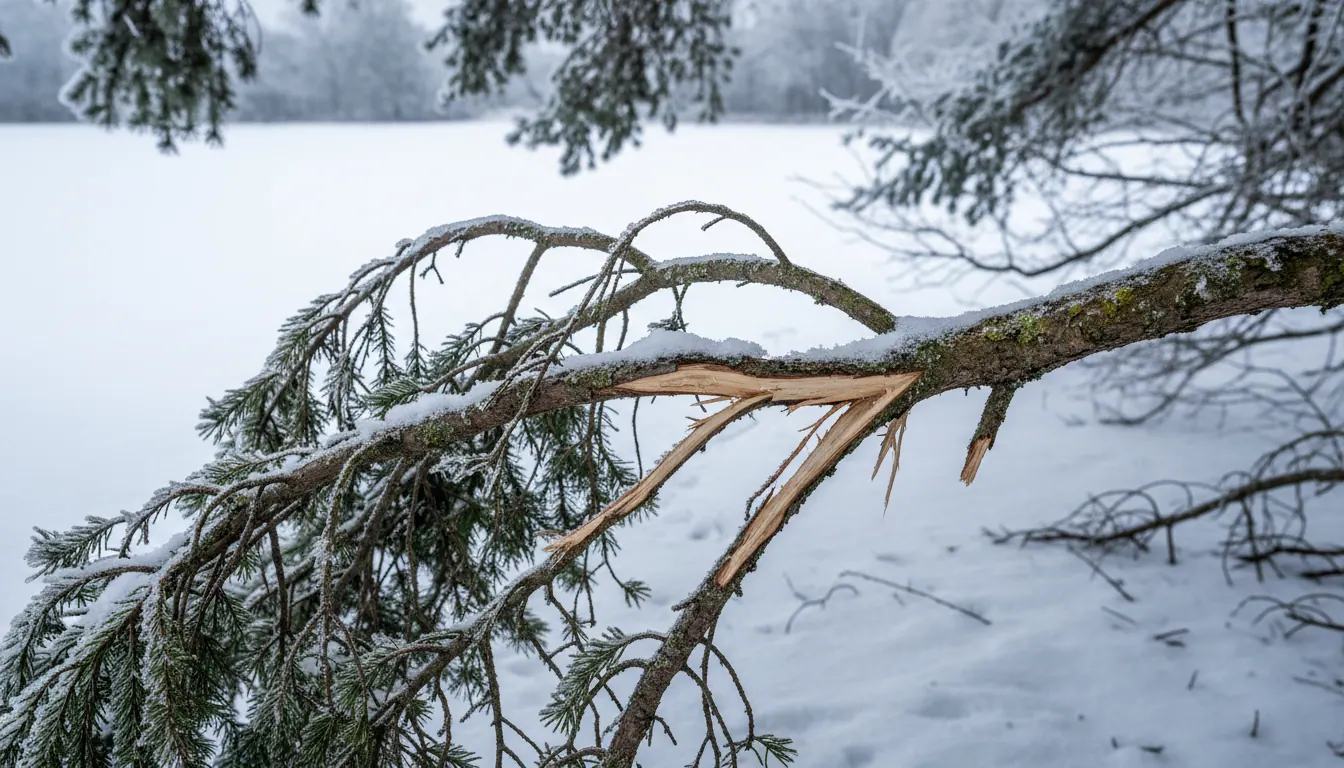
- Storm damage. A hanging branch, a partially uprooted root plate, or a split limb after autumn gales is not a DIY job. See our guidance on storm damage to trees: what to do after autumn gales in Newark and Lincolnshire.
When to prune trees: timing matters more than most people realise
"When to prune" is one of the most common questions we hear, and the answer varies by species.
The general rule for most deciduous trees (oak, ash, rowan, sycamore, walnut, yew) is late autumn through to early spring, while the tree is dormant. This reduces stress on the tree, limits the entry points for disease, and means the canopy is bare so we can actually see the structure clearly.
Cherry, plum and other stone-fruit trees are the exception. Pruning a cherry or plum in winter is one of the worst things you can do. Silver leaf disease, a serious fungal infection, enters through fresh pruning wounds and is most active in the colder months. The recommended window for stone-fruit trees is late spring to midsummer, when the tree is growing actively and can seal wounds quickly. If you have a cherry tree in your garden in Southwell or Sleaford that needs shaping, book it for June or July, not November.
Fruit trees generally (apple, pear) are best pruned in winter dormancy, between leaf fall and bud burst.
Conifers and leylandii hedges respond best to trimming in late summer, after the main growing flush but before the first frosts. Cutting hard into old wood at the wrong time can leave permanent brown patches. We have written more about this in our article on conifer hedge and leylandii reduction: keeping your privacy screen without killing it.
Bird nesting season: the rule that catches people out
Between March and August, active nests are protected by law. You cannot cut back hedges, trees or shrubs if doing so would disturb or destroy an active nest. This is not optional and it applies across Nottinghamshire and Lincolnshire exactly as it does everywhere else in the UK.
What this means in practice: if you are planning significant hedge work or tree pruning and it is currently spring or summer, we will check for nesting activity before we start. Jobs that can wait until September are often better scheduled then. For more detail on exactly which months apply and what the rules mean for your garden, read our article on what months you can't cut trees: bird nesting season rules for Newark and Nottinghamshire.
Tree Preservation Orders and conservation areas: check before you touch
This is the one that catches homeowners out more than any other. If your tree has a Tree Preservation Order (TPO) on it, or if your property sits within a conservation area, you may need permission from the local council before carrying out any work, even just pruning.
Newark and Sherwood District Council, North Kesteven District Council, Lincoln City Council and others across our patch all administer TPOs. Conservation areas cover many of the older villages in Nottinghamshire and Lincolnshire, including parts of Southwell, which has a particularly significant historic environment.
We always advise customers to check with their local planning authority before booking tree work on a mature or prominent tree. We can help you understand what you are likely to need, but the application itself goes to the council. For a full explanation of how this works locally, see our guide on whether you need permission to fell or prune a tree in Newark-on-Trent and Nottinghamshire.
Crown reduction vs removal: the question worth asking first
Not every tree that is causing a problem needs to come down. A mature oak or elm that is shading a garden, or a sycamore that has grown into the guttering, can often be brought back into proportion with a crown reduction. That means reducing the overall height and spread while keeping the tree alive and structurally sound.
Removal makes sense when a tree is dead, dying, structurally compromised beyond recovery, or in a position where it will always be a problem regardless of how it is managed. We talk through this with every customer before any work starts, because felling a healthy mature tree is permanent. We cover the decision in more depth in our article on crown reduction vs tree removal: which is right for your Newark garden?
Frequently asked questions
When is the worst time to prune trees in the UK? For most broadleaf trees, late spring when they are putting energy into new growth is not ideal, though it is rarely catastrophic. The genuinely bad timing is species-specific: stone-fruit trees (cherry, plum, damson) should never be pruned in winter because of silver leaf disease risk. Cutting any tree during active bird nesting season (March to August) without first checking for nests is also something to avoid, both legally and ethically.
What is another word for a tree surgeon? Arborist is the most common alternative, and the two are used interchangeably in the UK. You might also hear "tree care specialist" or "arboriculturalist" in more formal or technical contexts. In everyday conversation around Newark and Lincolnshire, most people just say tree surgeon.
What is it called when you cut a tree back? It depends on what you are doing. Pruning is the general term for removing branches to improve health, shape or safety. Crown reduction means reducing the overall height and spread of the canopy. Crown lifting removes the lower branches to raise the base of the canopy. Pollarding is a more severe cut, taking the canopy back to the main trunk or scaffold branches, and is usually only appropriate for certain species managed that way from a young age. Felling means removing the tree entirely.
Do I need a tree surgeon before autumn, or can it wait until spring? Autumn is genuinely a good time to get trees assessed, particularly in exposed areas like the Lincolnshire Wolds and the open Trent valley. The main growing season is over, most nesting activity has finished by September, and any structural weaknesses are about to be tested by winter gales. Getting a professional look at anything that concerns you before the storms arrive is much better than dealing with an emergency in January.
Get in touch
If you have a tree that is worrying you, or you simply want to know whether what you are looking at needs attention now or can wait, we are happy to take a look. We cover Newark-on-Trent, Southwell, Collingham, Bingham, Lincoln, Grantham, Sleaford and the wider Nottinghamshire and Lincolnshire area.
Call us on 07572 397309 and we will talk through what you have got and what, if anything, needs doing.
Ready when you are
Call us- Conifer hedge and leylandii reduction: keeping your privacy screen without killing it
- Crown reduction vs tree removal: which is right for your Newark garden?
- Storm damage to trees: what to do after autumn gales in Newark and Lincolnshire
- What months can't you cut trees? Bird nesting season rules for Newark and Nottinghamshire
- Do I need permission to fell or prune a tree in Newark-on-Trent and Nottinghamshire?