Patio moss and algae in winter: safe cleaning methods for Newark, Southwell and Lincoln
Moss and algae make winter patios dangerously slippery. Our guide covers cleaning methods, prevention and when to call us across Newark and Nottinghamshire.

Why winter is the worst time for moss and algae on your patio
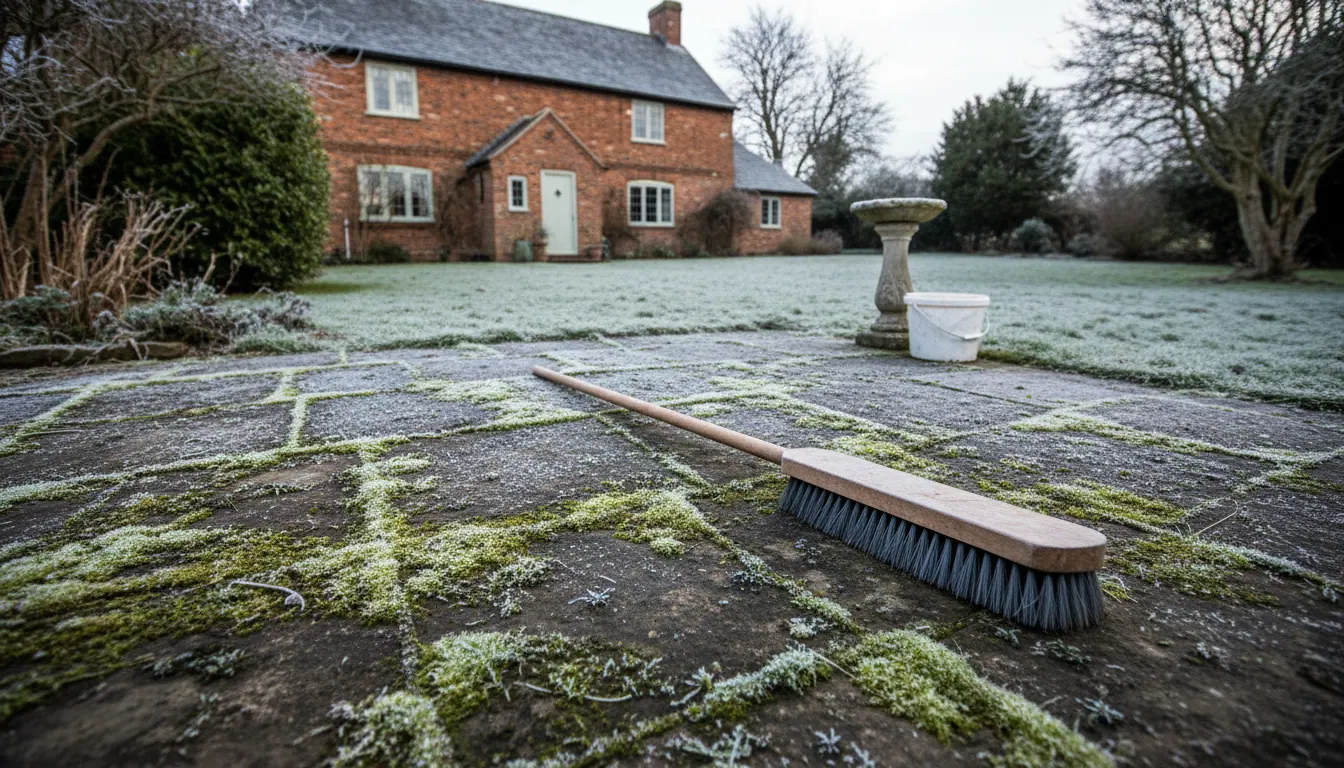
Frost, rain and low light are a perfect recipe for a green, slippery patio. Across the Trent Valley and the flatter parts of Nottinghamshire and Lincolnshire, winters tend to be wet and overcast for weeks at a time. Slabs that were perfectly clean in August can be coated in a slick green film by November.
Moss and algae thrive in damp, shaded conditions. North-facing patios, areas under trees, and any surface that stays wet after rain are the most vulnerable. Once a thin biofilm of algae takes hold, moss spores follow quickly, and the combination creates a genuine slip hazard, particularly for older residents or anyone with mobility concerns.
The good news is that patio moss and algae winter cleaning is straightforward if you know what you are doing. The better news is that the right approach also prevents the problem coming back as quickly next year.
What actually kills moss and algae on paving slabs
Let us deal with the two questions people ask most often: what kills moss on a patio, and what kills algae on slabs.
Moss is a plant with shallow roots. It does not penetrate into the slab itself, but it grips the surface tightly and holds moisture, which speeds up freeze-thaw damage to the pointing and the slab edges. You can physically scrape moss away with a stiff-bristled brush or a flat patio scraper, but that only removes what is visible. The spores and the damp conditions that caused it remain, so it returns within weeks unless you treat the surface afterwards.
Algae is trickier. It forms a thin, almost invisible biofilm before you can see the green colour, which means by the time the slabs look green they are already very slippery. Algae bonds to the surface at a microscopic level, so scrubbing alone rarely removes it completely.
The most effective approach combines a biocidal treatment with mechanical cleaning:
- A purpose-made patio or path cleaner containing a biocide (look for products with benzalkonium chloride or similar) will kill both moss and algae at the root.
- Apply it to dry or damp slabs, leave it to work for the time stated on the label, then scrub and rinse.
- For lighter growth, soda crystals dissolved in hot water are a popular and lower-chemical option. A strong solution scrubbed in with a stiff deck brush works well on algae on sandstone or concrete slabs, though it can affect the colour of natural stone if left too long.
- Washing-up liquid added to the soda-crystal solution helps it spread and penetrate the biofilm more effectively.
A word on vinegar: it is often suggested online, but dilute household vinegar is not reliably effective on established algae, and on natural stone or mortar joints it can cause surface etching over time. We would not recommend it as a primary treatment.
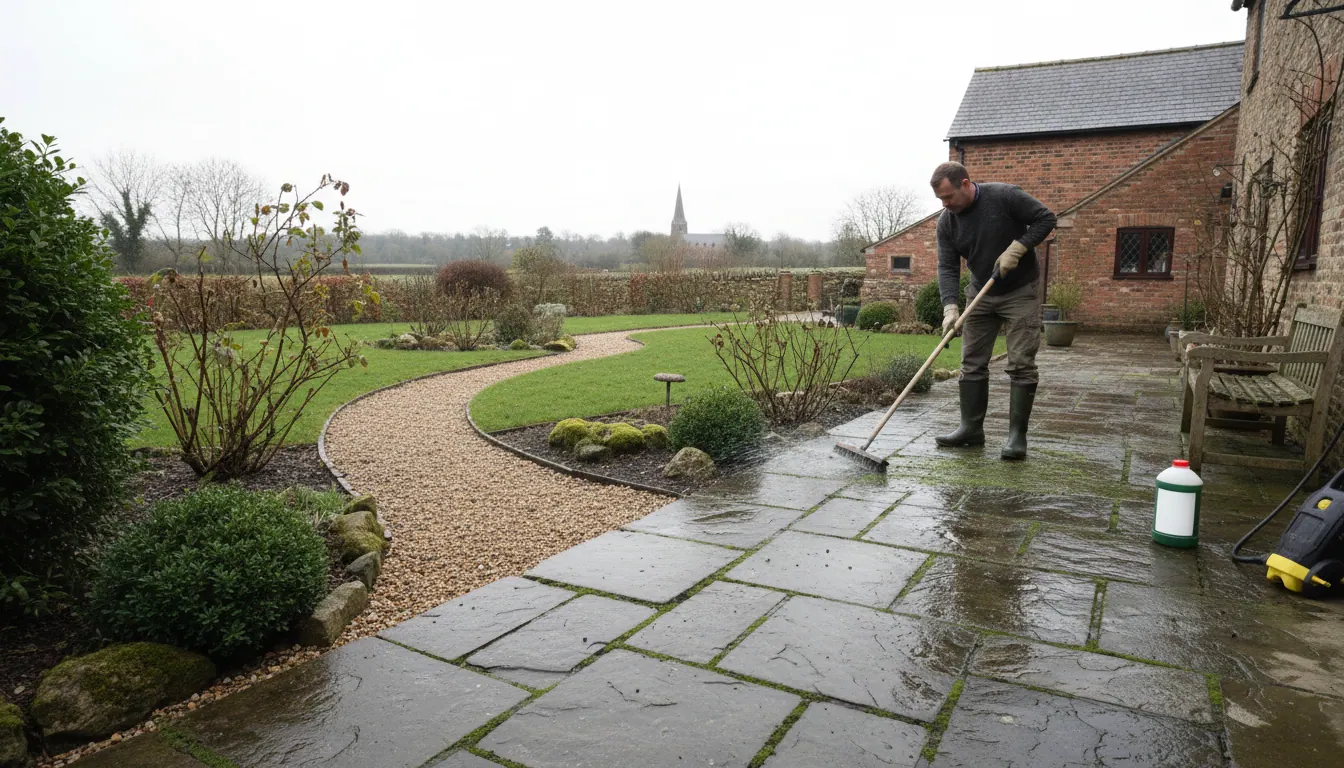
Cleaning a patio without a pressure washer
Not everyone has a pressure washer, and in some situations using one creates more problems than it solves. High pressure can blow out pointing, damage softer sandstone, and spread moss spores across a wider area of the garden.
A perfectly clean patio is achievable without one:
- Remove loose debris with a stiff brush first.
- Apply your chosen cleaner (biocidal product or soda-crystal solution) and allow it to dwell.
- Work in sections with a hard-bristled brush, scrubbing in circular motions.
- Rinse thoroughly with a bucket or garden hose on a jet setting.
- Allow to dry fully before assessing whether a second pass is needed.
This method takes longer than pressure washing but is gentler on the joints and the slab surface. For a moderately affected patio, one good afternoon's work in dry conditions will make a real difference.
If the growth is heavy, or the patio is large, or you simply do not have the time or the physical capacity to do it yourself, that is exactly where we come in. Our driveway and patio pressure washing service across Newark and Sleaford uses professional equipment at the correct pressure for your slab type, and we re-sand joints and apply a surface treatment where needed.
Stopping patio weeds without chemicals
Weeds between patio slabs are a separate problem from moss and algae, but they often appear together because the same damp, neglected conditions encourage both. The most reliable long-term solution is mechanical: keep the joints well pointed so there is no gap for seeds to germinate in.
For existing weeds, a long-handled crack weeder or a flat-bladed tool gets the root out without chemicals. Boiling water poured carefully into the joints kills weeds and is safe around children and pets. Re-pointing with a kiln-dried jointing sand or a resin-based grout after cleaning is the single best preventive step you can take.
The best time of year to tackle patio moss and algae
The honest answer is: as soon as you notice it. But if you are planning a single annual clean, late autumn (October to November) is the most practical window for most people in our area. Here is why:
- Growth slows as temperatures drop, so a good clean in late autumn keeps the patio cleaner through winter.
- You are removing the damp biomass before it freezes and expands into the pointing overnight.
- A clean patio is safer through the wetter, darker months when slips are most likely.
- Spring is also a good time if you missed autumn, as the surface dries faster and you can assess any frost damage to the pointing at the same time.
Avoid cleaning in freezing conditions. Wet slabs that freeze before they dry can become more slippery than they were before, and some cleaning products do not activate properly below about five degrees Celsius.
For more on keeping outdoor surfaces safe through wet Trent Valley winters, our article on patio and pathway maintenance in wet winters covers the broader picture, including drain clearance and path safety.
How we can help across Newark, Nottinghamshire and Lincolnshire
We cover a wide area: Newark-on-Trent, Southwell, Collingham, Bingham, Lincoln, Grantham, Sleaford and the villages in between. Patio and driveway cleaning is one part of our broader garden maintenance work, and we often combine it with other jobs on the same visit, whether that is a hedge trim, a garden clearance or a fence repair.
If you have a large patio, a driveway, or both, and the moss and algae have built up over several years, a professional clean makes a significant difference to the appearance and the safety of the surface. We use commercial-grade equipment and follow it up with a treatment to slow regrowth, so you are not back to square one by February.
We also carry out garden maintenance on a regular basis for homeowners who would rather not spend their weekends on outdoor upkeep. That can include keeping paths and patios clear of moss and leaf build-up through the wetter months, particularly useful for older residents or anyone with a larger property to manage.
Frequently asked questions
What will kill moss on a patio? The most effective approach is a purpose-made biocidal patio cleaner, which kills the moss at spore level rather than just removing the visible growth. Apply it, allow it to dwell, then scrub and rinse. For lighter coverage, a strong solution of soda crystals in hot water works well on concrete and most clay pavers. After cleaning, keeping the surface dry and well-pointed is the best way to slow regrowth.
Does vinegar remove green algae from paving? Household vinegar is sometimes suggested as a natural option, but it is not reliably effective on established algae and can damage natural stone surfaces and mortar joints over time. A proper biocidal cleaner or a soda-crystal solution will do a more thorough job without the risk of surface damage.
What is the best time of year to remove moss from a patio? Late autumn is the most practical time for most homeowners in Nottinghamshire and Lincolnshire. Removing moss before the hardest frosts prevents freeze-thaw damage to pointing and joints, and it leaves the surface safer through the wet winter months. Spring is the next best option if you missed the autumn window.
Can I clean my patio without a pressure washer? Yes, absolutely. A stiff-bristled brush, a biocidal or soda-crystal cleaner, and a garden hose will clean most patios effectively. It takes more time and effort than pressure washing, but it is gentler on older pointing and softer stone types. If the growth is heavy or the area is large, a professional clean is worth considering rather than a day's hard work that may not fully shift deep-seated algae.
Ready to get your patio sorted?
If the moss and algae have taken hold and you would rather have it dealt with properly, we are happy to take a look and give you a straightforward quote. We work across Newark, Lincoln, Grantham, Sleaford, Southwell, Bingham and the surrounding area. No obligation, no hard sell. Just give us a call and we can arrange a time to visit.