Do I need permission to fell or prune a tree in Newark-on-Trent and Nottinghamshire?
Thinking of removing a tree in Newark-on-Trent? Find out when you need council permission, what TPOs mean and how we can help across Nottinghamshire.

Tree Removal Permission in Newark: What You Need to Know Before You Pick Up the Phone
Removing a tree from your garden sounds straightforward. In many cases it is. But in Newark-on-Trent and the surrounding villages of Nottinghamshire and Lincolnshire, there are rules that can catch homeowners out, and getting it wrong can result in a fine or an enforcement notice. This guide explains exactly when permission is needed, what to check before any work starts, and how we can help you navigate it.
Tree Preservation Orders: The Big One
A Tree Preservation Order (TPO) is a legal protection placed on a specific tree or group of trees by the local planning authority. In our area, that is Newark and Sherwood District Council for most of the Newark-on-Trent, Southwell, Collingham and Bingham areas, and the relevant Lincolnshire district councils for properties closer to Grantham, Sleaford or Lincoln.
If a TPO is in place, you cannot remove, top, lop or carry out any significant work on that tree without applying for consent first. It does not matter whether the tree is in your back garden or on the boundary of your property. The order applies.
You can search for TPOs on the Newark and Sherwood planning portal (publicaccess.newark-sherwooddc.gov.uk) or contact the council's planning department directly. It is worth doing this before you book any tree work, not after.
What counts as significant work under a TPO?
- Felling or removing the tree entirely
- Crown reduction (cutting back the overall size of the canopy)
- Topping or lopping major branches
- Any work that would materially affect the tree's health or appearance
Minor pruning to remove dead wood or a small amount of growth is sometimes permitted without a formal application, but if in doubt, check with the council first. We always advise customers to do this before we quote for TPO-protected trees.
Conservation Areas Add Another Layer
A large number of properties in Newark, Southwell, and several of the older villages across this part of Nottinghamshire and Lincolnshire sit within designated conservation areas. If your property is in a conservation area, different rules apply even if there is no TPO on the tree.
For any tree with a trunk diameter of 75mm or more (measured at 1.5 metres from the ground), you must give Newark and Sherwood District Council six weeks' written notice before carrying out any work. This is called a Section 211 notice. The council can use that six-week window to decide whether to put a TPO on the tree, effectively giving it immediate protection.
You can submit a Section 211 notice through the Newark and Sherwood online planning applications portal. We can advise you on the process, but the application itself is the responsibility of the property owner.
If you are unsure whether your home is in a conservation area, the council's website has an interactive map, or you can simply call the planning department and give them your address.
Trees Outside Protected Areas: When No Permission Is Needed
If your tree is not covered by a TPO and your property is not in a conservation area, you generally do not need permission to remove it. That applies to the majority of domestic gardens across the Newark area, including many of the newer estates in Balderton, Fernwood and Winthorpe.
That said, there are still things to consider:
- Boundary disputes. If the tree sits on or near a boundary, it is worth confirming ownership before any work starts. A tree that is partly on a neighbour's land cannot be removed without their agreement.
- Neighbour notification. Even where it is not legally required, letting neighbours know is good practice, especially if a large tree is being felled near a shared boundary.
- Deed restrictions. Some properties, particularly on newer developments, have restrictive covenants in the deeds that limit what you can do with trees or hedges. Check with your solicitor if you are unsure.
Bird Nesting Season: A Practical Limit on Timing
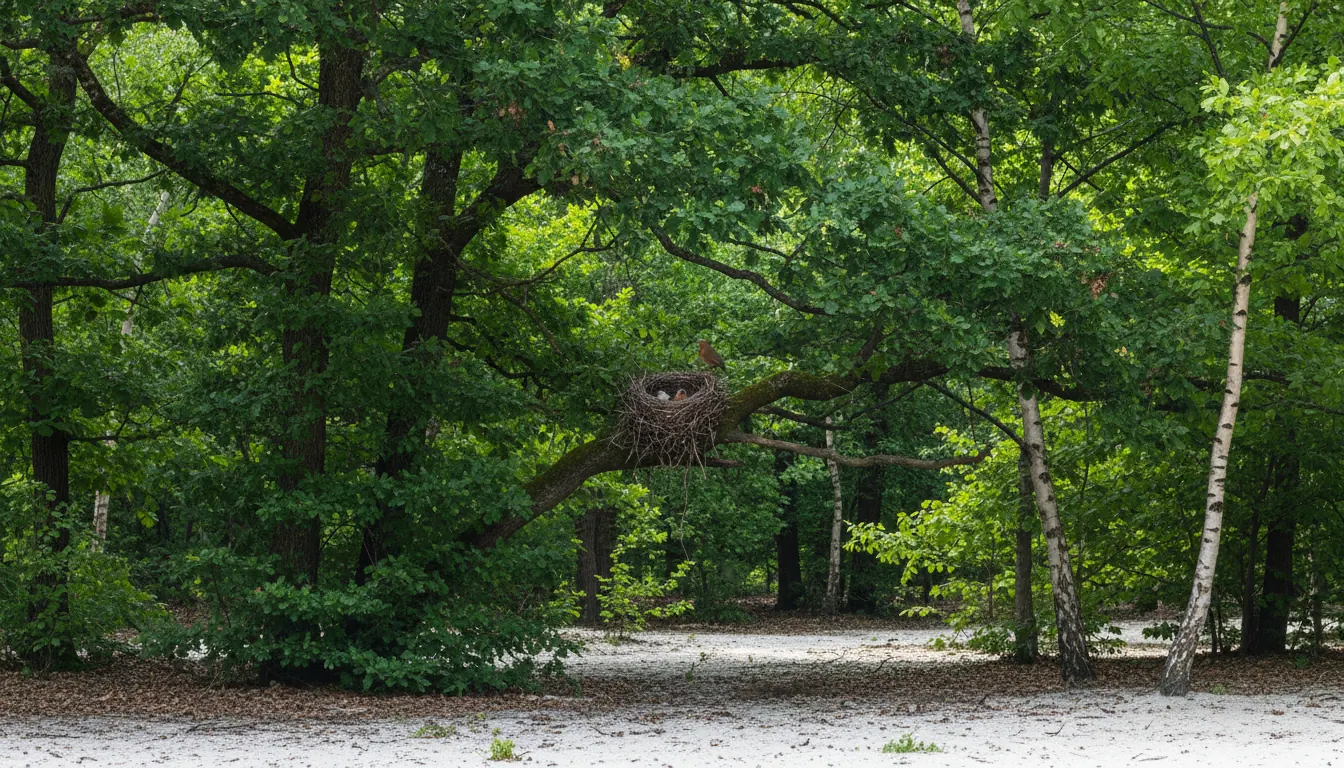
Even where no planning permission is needed, there is a practical restriction that affects tree and hedge work across the whole of the UK. Under the Wildlife and Countryside Act 1981, it is an offence to disturb or destroy an active bird's nest. Most birds nest between March and August, which means this is the period when we need to be most careful.
Before any tree removal or significant pruning during those months, we check for active nests. If nesting activity is found, work on that tree has to pause until the nest is no longer in use. This is not bureaucracy for its own sake. It is simply the law, and it is the right thing to do.
If timing is flexible, booking tree removal for late autumn or winter (September through to February) avoids this issue entirely and is often when we have more availability. It also tends to be easier to assess the full structure of a tree once the leaves have dropped.
What Happens If You Remove a Tree Without Permission?
This is the question we get asked most often, usually by homeowners who have already had work done by someone who did not check first.
If a TPO-protected tree is removed without consent, the local planning authority can issue an enforcement notice. The landowner can be required to replace the tree, and in serious cases, there is the possibility of prosecution and an unlimited fine. The same applies to trees in conservation areas where proper notice was not given.
It is also worth noting that "I didn't know" is not a defence. The responsibility sits with the property owner, not the contractor. So if a tree surgeon tells you no permission is needed and they are wrong, you are still the one who could face enforcement action.
This is why we always check before we quote. If there is any doubt about a tree's status, we tell you to verify with the council before we proceed.
How We Help Across Newark, Southwell, Grantham and Beyond
We cover a wide area: Newark-on-Trent, Southwell, Collingham, Bingham, Lincoln, Grantham, Sleaford and the villages and rural properties in between. That includes a lot of varied terrain, from the flat Trent valley with its mature riverside trees to the older market towns with conservation-area streets lined with established oaks and ash trees.
Our team handles the full range of tree work:
- Tree removal and felling, including large and complex removals close to buildings, driveways and roads
- Crown reduction and reshaping, to reduce the size of a tree while keeping it healthy
- Dead wood removal and hazard pruning, particularly important after the wet winters common in the Trent valley
- Stump grinding, to clear the ground after a tree has been removed, ready for turfing, paving or replanting
- Emergency call-outs for storm-damaged trees, cracked limbs and leaning trunks
We are also experienced in working with Newark and Sherwood District Council's application process for TPO work and conservation area notices, and we can give you clear guidance on what paperwork is needed before we start.
Frequently Asked Questions
Do I need permission to remove a tree from my garden in Newark?
It depends on two things: whether the tree has a Tree Preservation Order on it, and whether your property is in a conservation area. If neither applies, you generally do not need permission. If a TPO is in place, you must apply to Newark and Sherwood District Council for consent before any work begins. If you are in a conservation area, you must give the council six weeks' written notice. We always recommend checking both before booking any tree work.
What happens if I cut down a tree without permission in the UK?
If the tree was protected by a TPO or in a conservation area without proper notice, the local planning authority can take enforcement action. This can include requiring you to replace the tree and, in more serious cases, prosecution. Fines are unlimited. The responsibility sits with the landowner, so it is worth making sure everything is in order before work starts.
What months are you not allowed to cut trees?
There is no blanket ban on tree cutting at any time of year, but between March and August you must check for active bird nests before starting work. Disturbing or destroying a nest in use is an offence under the Wildlife and Countryside Act 1981. For this reason, many people prefer to schedule tree removal and significant pruning between September and February.
Which trees can be cut down without permission in the UK?
Any tree that does not have a TPO and is not in a conservation area can generally be removed without planning permission, regardless of species. Size does not automatically mean a tree is protected. However, it is always worth checking the Newark and Sherwood planning portal or contacting the council before assuming a large, established tree is unprotected, especially in older parts of Newark, Southwell or other historic villages in the area.
Ready to Get the Ball Rolling?
If you have a tree you are thinking about removing or pruning, the best first step is to find out whether it is protected. Once you know where you stand, we can give you a clear, honest quote and handle the work safely and properly.
We work across Newark-on-Trent, Southwell, Collingham, Bingham, Grantham, Sleaford, Lincoln and the wider Nottinghamshire and Lincolnshire area. You can reach us on 07572 397309 or get in touch using our contact form and we will get back to you promptly.