What months can't you cut trees? Bird nesting season rules for Newark and Nottinghamshire
Find out when you can cut trees during UK nesting season, what the law says, and how we help Newark, Southwell and Grantham homeowners plan tree work safely.

The short answer: timing your tree work around nesting season matters
Every spring, we get calls from homeowners across Newark, Southwell, Collingham and the wider Nottinghamshire and Lincolnshire area asking the same thing: "Is it too late to get my trees cut?" It is a fair question, and the answer is more nuanced than a simple yes or no.
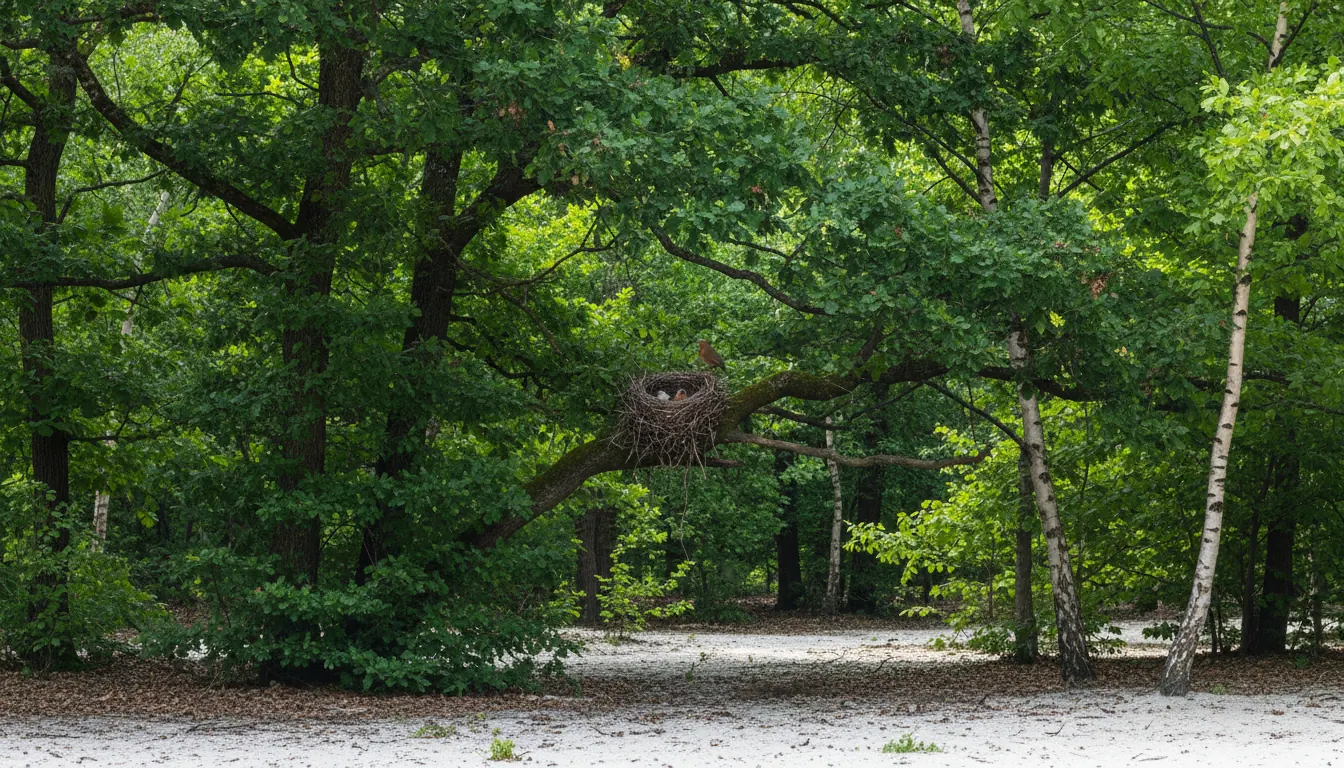
Bird nesting season in the UK runs roughly from March to August. During those months, most wild birds are actively nesting, and disturbing or destroying an active nest is a criminal offence under the Wildlife and Countryside Act 1981. That applies whether the nest is in a garden oak, a roadside ash, a beech hedge, or a scrubby hawthorn at the field edge.
So the practical window for the most significant tree surgery, hedge cutting, and clearance work is September through to the end of February. That is when we do the bulk of our heavier pruning, crown reductions, felling, and hedge trimming across our service area.
What the law actually says about cutting trees during nesting season
The Wildlife and Countryside Act 1981 makes it an offence to intentionally take, damage, or destroy the nest of any wild bird while that nest is in use or being built. There is no official government list of "nesting months" with hard start and end dates, which is exactly why so many people search for clarity on this.
The RSPB advises treating the period from March to August as the core nesting season, but nesting activity can start earlier in a mild winter, and some species, including wood pigeons, can nest almost year-round. A wood pigeon nesting in your garden cherry tree in November is not unheard of in Nottinghamshire.
The key word in the law is "intentionally". If you genuinely did not know a nest was there, your legal position is different to someone who spots a nest and carries on regardless. That said, any reputable tree surgeon, including our team, will always check for active nests before starting work, regardless of the time of year.
It is also worth noting that nesting season rules are entirely separate from Tree Preservation Orders (TPOs) and conservation area restrictions. Those apply all year round. If your property sits in a conservation area, or your tree carries a TPO, you need council consent before any work, no matter the season. We cover a lot of villages and market towns where this applies, from Southwell (which has an extensive conservation area) to parts of Grantham and Bingham. For a full breakdown of when you need permission, have a read of our article on whether you need permission to fell or prune a tree in Newark-on-Trent and Nottinghamshire.
Can you ever cut trees between March and August?
Yes, in some circumstances. The law does not ban all tree work from March to August. It bans disturbing active nests.
If a tree is dead, dying, or poses an immediate safety risk, work can proceed regardless of the season. A storm-damaged oak leaning over a roof in Collingham after autumn gales, or a large ash limb hanging over a public footpath near Sleaford, cannot wait until September. Safety takes priority, and the law recognises that.
Before starting any summer tree work, a competent tree surgeon will carry out a careful check for active nests. If none are found, the work can go ahead. If a nest is found with eggs or chicks present, the sensible and legal course of action is to wait. We will always be straight with you about this, even if it means rescheduling.
A few practical points:
- A nest with no eggs or chicks, and no signs of recent activity, is generally considered inactive.
- Partial pruning away from the nesting area may be possible in some cases.
- Hedges that have been left uncut for several years can become dense nesting habitat, so timing the first cut is especially important.
The best time of year for tree and hedge work in our area
If you want to get the most done with the least disruption, late autumn and winter are your friends. September through February is the window we recommend for:
- Crown reductions and crown lifting on mature trees
- Felling and stump grinding
- Hedge cutting and significant hedge reduction
- Garden clearance of overgrown plots
- Fencing installation where tree or hedge roots are involved
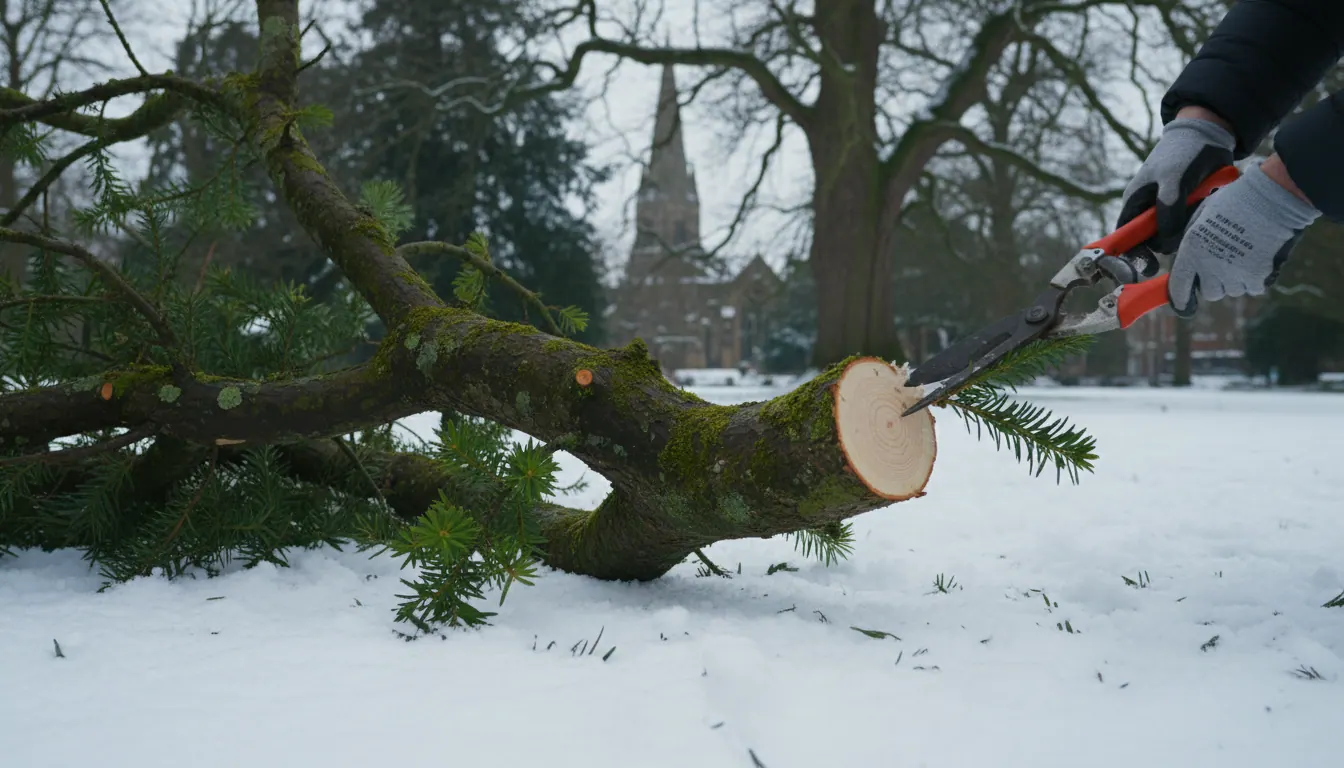
There are practical reasons beyond nesting season too. Trees cut during dormancy (broadly November to February) tend to recover well. Deciduous trees without their leaves are far easier to assess and work on safely. And across the Trent valley, winter ground conditions can be soft, so we often plan access and machinery carefully to avoid churning up lawns and verges.
If you have been putting off a crown reduction on a large beech or oak in your Newark or Southwell garden, autumn is genuinely the ideal time to book it in. We get busy from September onwards, so early enquiries help.
What about fencing, patios, and driveways?
Nesting season rules apply specifically to vegetation work, but it is worth knowing that some of our other services can run comfortably through spring and summer with no nesting-season conflict at all.
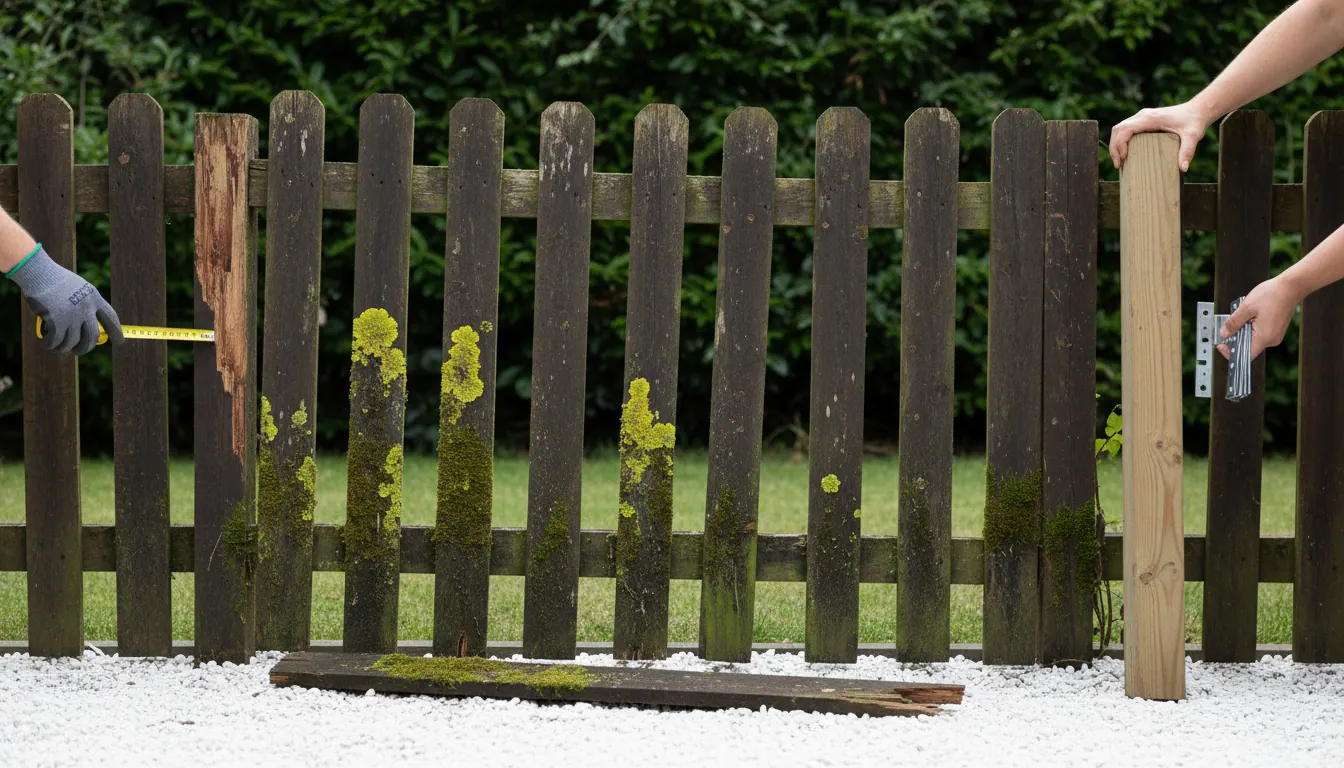
Fencing installation and repair, patio and driveway pressure washing, turfing, and hard landscaping are not restricted by nesting season. If you want a new fence installed along your boundary in April, or your driveway pressure-washed in June, those jobs can go ahead without any of the seasonal considerations that apply to hedge and tree work.
We cover all of these services across Newark, Lincoln, Grantham, Bingham, and the surrounding villages, so if you have a mix of jobs, we can often plan tree and hedge work for the autumn and fit in the landscaping or fencing work earlier in the year.
Frequently asked questions
Is it illegal to cut trees during nesting season in the UK?
It is not illegal to cut trees between March and August as a blanket rule. What is illegal is intentionally destroying or disturbing an active bird's nest. A qualified tree surgeon should check for active nests before starting any work during this period. If an active nest is found, the work must pause until the nest is no longer in use.
What months are you not allowed to cut trees?
There are no months where tree cutting is categorically banned in UK law, but the risk of disturbing active nests is highest from March to August. Most professional tree surgeons, including our team, recommend scheduling significant pruning, felling, and hedge cutting between September and February wherever possible. This avoids the nesting risk and also coincides with the dormant season, which is better for tree health.
How long does nesting season last?
The RSPB considers the core nesting season to run from March to August, so roughly six months. In practice, some species start earlier in a mild winter, and species like wood pigeons can nest outside these months. It is always worth a visual check before starting any vegetation work, whatever the time of year.
Can you cut down a tree with a pigeon nest in it in the UK?
If the nest is active, meaning eggs or chicks are present, it is an offence to destroy it intentionally. A wood pigeon nest with no eggs and no signs of current use would generally be considered inactive. If you are unsure, the safest approach is to get a professional to assess the tree before any work starts. We are happy to take a look and give you an honest assessment.
Planning your tree work around the seasons
The practical upshot of all this is straightforward. If you have tree surgery, hedge cutting, or garden clearance on your list, the September to February window is when we can do the most, with the least risk of nesting conflicts and the best conditions for the trees themselves.
If something cannot wait, whether it is a dangerous limb, a storm-damaged tree, or an overgrown hedge blocking your sight line at a junction, get in touch and we will assess the situation properly. We will check for nesting activity, advise you on what can and cannot be done, and plan the work accordingly.
We work across Newark-on-Trent, Southwell, Collingham, Bingham, Lincoln, Grantham, Sleaford, and the surrounding Nottinghamshire and Lincolnshire villages. You can reach us on 07572 397309 or use the contact form to tell us what you need.
Ready to get your tree or hedge work booked in? Get in touch with us and we will talk through the best timing for your property.