Garden maintenance through wet winters in the Trent Valley: keeping paths safe and drains clear
Our practical winter garden maintenance guide for Nottinghamshire and Lincolnshire homeowners. Protect your plot, tidy borders and plan for spring.

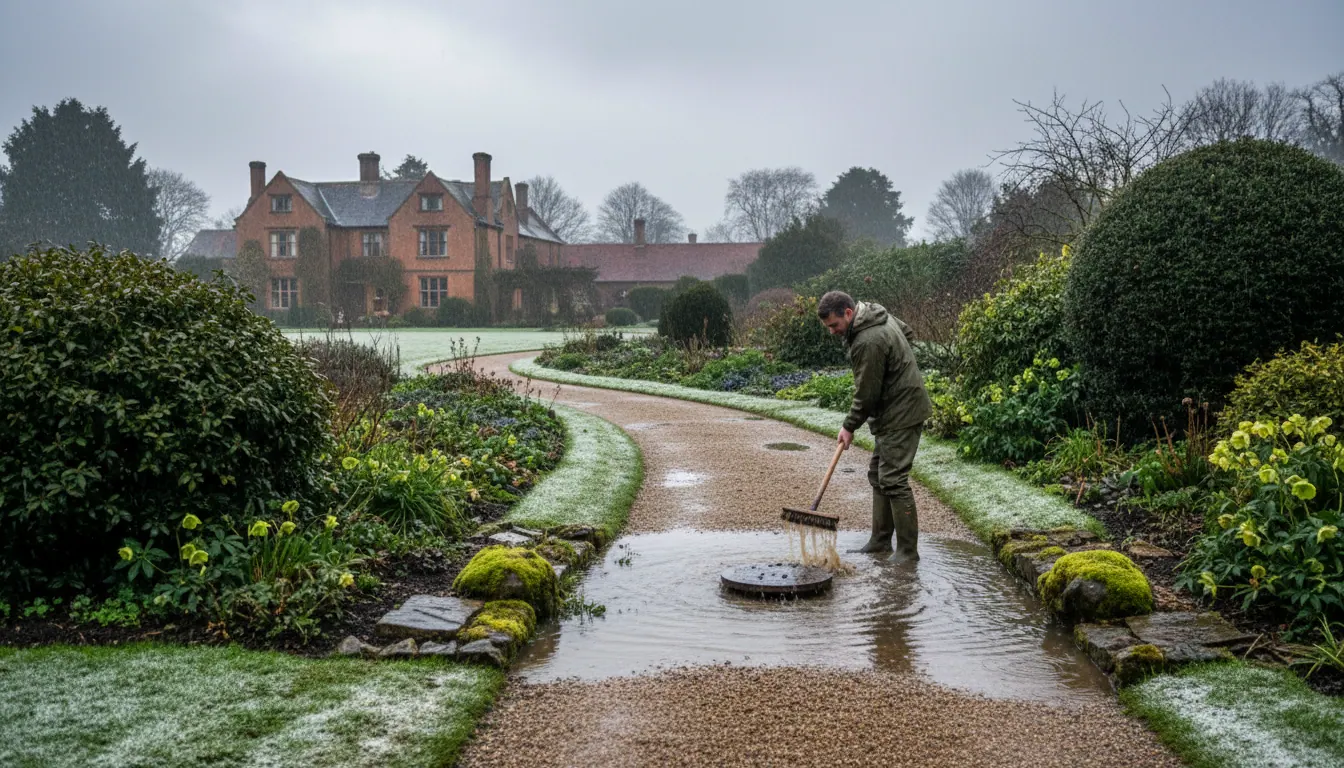
The garden does not stop needing attention just because the growing season has ended
November arrives, the last leaves come down, and it is tempting to shut the back door and leave the garden to itself until March. Most of us do it. But a few hours of winter maintenance now makes an enormous difference to how your plot looks and performs come spring, and it can prevent some genuinely expensive problems further down the line.
We work across Newark-on-Trent, Southwell, Collingham, Bingham, Grantham, Sleaford and Lincoln, and every winter we see the same issues: fences weakened by wet ground that fail in the first January gale, hedges that have been left to thicken until they are almost unmanageable, and gardens that have been cleared in a rush rather than properly prepared. This guide covers what actually needs doing, when to do it, and when it is worth calling us rather than tackling it yourself.
When is the right time to tidy the garden for winter?
The honest answer is: not all at once, and not too early.
Cutting everything back in October removes the seed heads and dead stems that birds feed on through the coldest months. It also strips away the hollow stems and leaf litter that beetles, lacewings and other beneficial insects use for shelter. A better approach is to do the work in stages.
Late October to early November: Clear annual bedding, lift tender bulbs (dahlias, cannas), cut back any plants that have gone slimy or diseased. Pull out spent vegetable crops and compost anything healthy.
November to December: Tidy herbaceous perennials. Cut back most of them to about 10 cm above the ground, but leave ornamental grasses, sedums and anything with attractive seed heads until late winter. They look good with a frost on them and they earn their keep ecologically.
December to February: This is the time for harder structural work: hedge trimming (outside the bird nesting season, which runs from March to August), pruning shrub roses, renovating overgrown beds and borders, and getting fences and garden structures checked before the worst of the winter weather.
If you have inherited an overgrown plot or simply let things get away from you over the summer, our overgrown garden clearance in Lincolnshire article talks through where to start.
Mulching: what to use and why it matters this time of year
Mulch is one of the most useful things you can apply in late autumn. A layer of organic material spread around the base of shrubs, trees and perennials does several things at once: it insulates roots from hard frosts, suppresses winter weeds, retains moisture during dry spells, and slowly improves the soil structure as it breaks down.
Garden compost, well-rotted farmyard manure and composted bark all work well. Apply it 5 to 10 cm deep, but keep it away from the base of woody stems where it can cause rot. If you are mulching around fruit trees, roses or shrubs that suffered from disease over the summer, clear away any fallen leaves first rather than trapping the spores underneath.
The Trent valley and the heavier clay soils around Newark and Collingham tend to hold moisture well into winter, which means waterlogging is a bigger risk than drought. On those soils, a lighter mulch of composted bark or leaf mould works better than thick manure, which can sit wet and airless on already-heavy ground.
Lawns: what to do (and what not to do)
Grass in Nottinghamshire and Lincolnshire is generally still growing slowly until December, then it stops almost entirely until February or March. The key rules for winter lawn care are straightforward.
- Stop mowing once the grass stops actively growing, usually late November.
- Keep off the lawn when it is frozen or waterlogged. Walking on frosted grass damages the blades and leaves brown footprints that last for weeks.
- If you have a shaded, mossy lawn, late autumn is a good time to scarify and aerate while the ground is still workable.
- Clear fallen leaves regularly. A thick mat of wet leaves left on the grass through winter will kill it.
If your lawn has had a rough year and needs more than a tidy, we can help with turfing and lawn restoration. It is worth getting in touch in winter so we can assess the ground and plan the work for early spring when conditions allow.
Fences: winter is when the problems show up
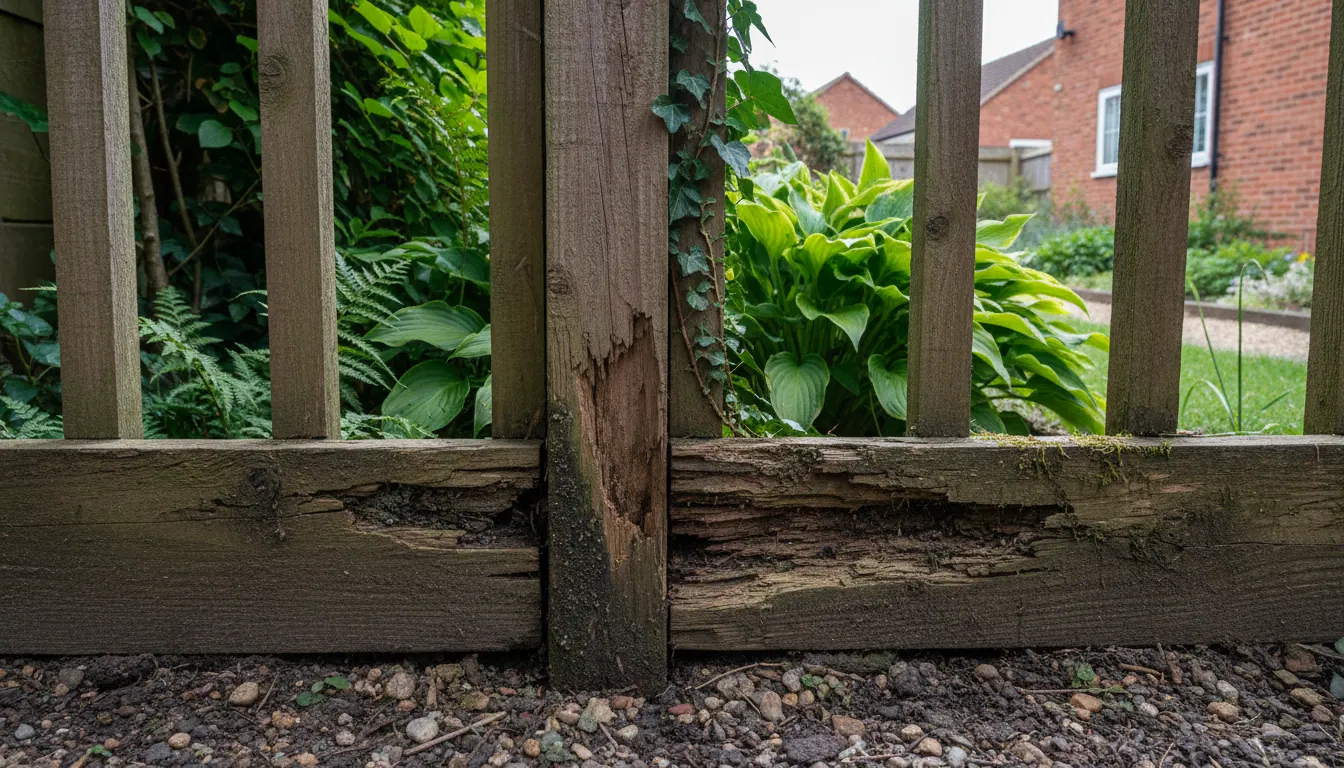
Wet winters are hard on fencing. The ground around fence posts stays saturated for weeks at a time, gravel boards rot from the bottom up, and panels that seemed fine in summer suddenly start leaning or splitting. We see this every year across the villages around Southwell, Bingham and Sleaford.
A quick check now can save a bigger job in February. Look for:
- Posts that move when you push them (the concrete may have cracked or the post itself may have rotted at ground level)
- Gravel boards that have gone soft or crumbly at the base
- Panels with broken rails or gaps where the bottom rail has pulled away
- Gates that no longer close properly, often because a post has shifted
Sometimes the fix is straightforward: a few new panels, a gravel board replacement, or a post repair rather than a full replacement. Our article on new fence panels and gravel boards covers exactly this situation.
Trees and hedges: what winter maintenance is appropriate
Winter is actually a good time for a lot of tree and hedge work, precisely because the plants are dormant and the structure of the canopy is visible without leaves. Deciduous hedges such as beech, hornbeam and hawthorn can be cut hard in late winter without causing stress to the plant.
A few things to be aware of:
Bird nesting season runs from March to August. This is not a legal absolute (nesting activity is what the law protects, not the calendar), but cutting hedges from September through to the end of February is far less likely to disturb active nests. If you have a large boundary hedge around a property in Southwell or Collingham that has not been touched in a couple of years, now is the window to get it done.
Storm damage is a winter concern. Autumn gales across the Lincolnshire and Nottinghamshire countryside regularly bring down branches or leave trees with split stems and leaning trunks. If a tree on your property looks compromised after a storm, do not leave it. Our piece on when to call a tree surgeon covers the warning signs to look for.
Tree Preservation Orders and conservation areas. A number of villages in our area, including parts of Southwell and the surrounding Nottinghamshire countryside, have conservation area designations. Before felling or carrying out significant pruning on any tree in these areas, check with Newark and Sherwood District Council or the relevant local authority. We can advise on what work is likely to need notification or consent.
Patios and driveways: winter is when algae takes hold
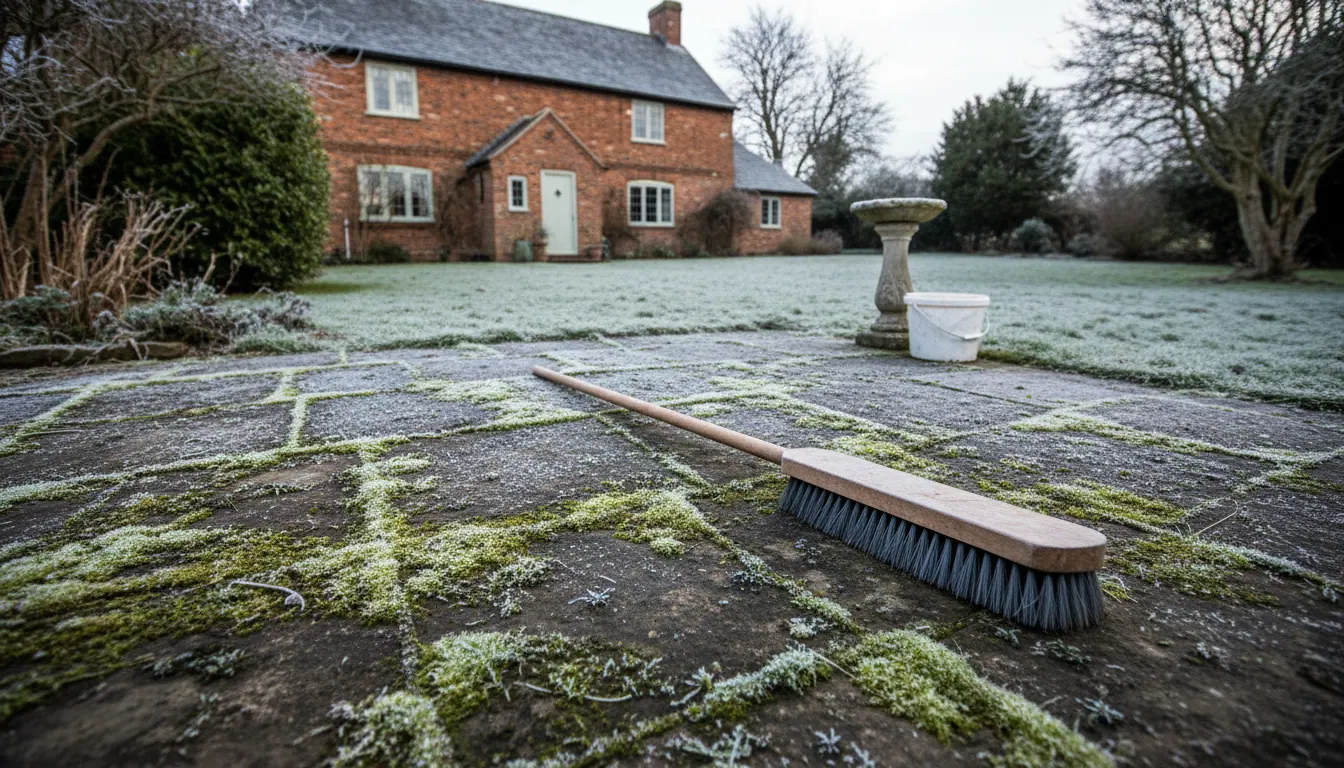
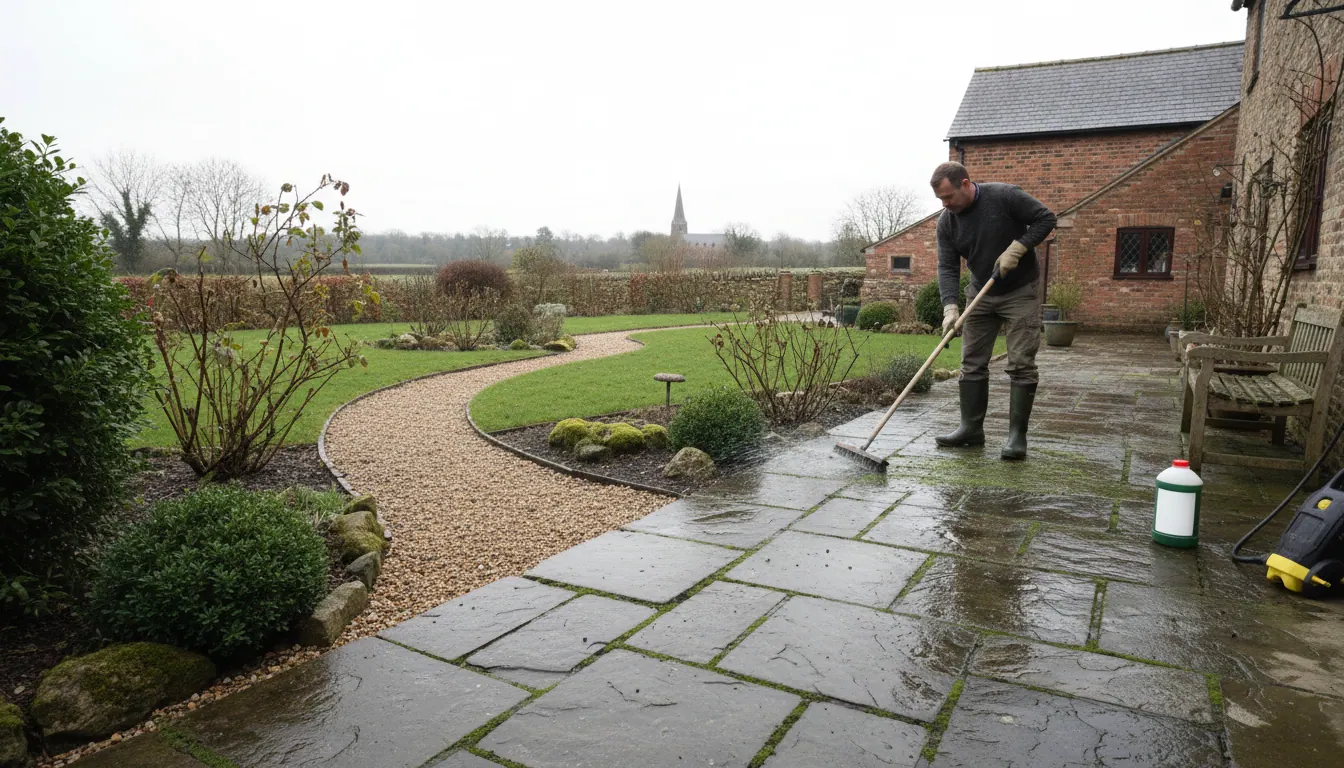
Wet, dark winters are ideal conditions for algae, moss and lichen to colonise paving. It builds up slowly, becomes slippery, and by February a patio that looked fine in September can be genuinely hazardous.
Pressure washing is most effective when done in late autumn before the worst of the weather, or in early spring once the hard frosts have passed. Either way, cleaning the surface and applying a good patio sealer or algae inhibitor will keep it in much better condition through the winter months. We cover this in more detail in our driveway and patio pressure washing guide for Newark and Sleaford.
Frequently asked questions
When should I tidy my garden for winter in Nottinghamshire? Do it in stages rather than all at once. Clear diseased or slimy plants in October, tidy herbaceous borders through November and December, and leave ornamental seed heads until late winter for wildlife. Structural work such as hedge trimming and fence repairs is best done between November and February, outside the bird nesting season.
What is the best mulch to use in a Nottinghamshire garden? Composted bark, garden compost and well-rotted farmyard manure all work well. On the heavier clay soils around Newark and the Trent valley, composted bark or leaf mould is often preferable to thick manure because the ground already holds moisture. Apply 5 to 10 cm deep and keep it clear of woody stems.
Can I cut my hedge in winter? Yes, and for most deciduous hedges winter is actually the ideal time. The plants are dormant, you can see the shape more clearly without leaves, and you are well outside the March-to-August bird nesting season when disturbance to active nests is a real risk. Conifers and leylandii are a partial exception: they can be trimmed lightly in late summer or early autumn but should not be cut hard back into old wood at any time of year.
Do I need permission to cut or fell a tree on my property in Nottinghamshire? It depends. Trees covered by a Tree Preservation Order require consent from the local council before any work is carried out. Trees in conservation areas require you to give the council six weeks' notice before felling. If you are unsure whether your tree is protected, check with Newark and Sherwood District Council or your local authority before booking any work. We are happy to advise when we visit for a quote.
Get the winter maintenance sorted before the hard frosts arrive
A bit of time in the garden now, or a call to us to handle the heavier work, pays back well in spring. We cover Newark-on-Trent, Southwell, Collingham, Bingham, Lincoln, Grantham, Sleaford and the surrounding Nottinghamshire and Lincolnshire countryside, and we are happy to come and take a look at whatever you have got going on.
Call us on 07572 397309 to arrange a visit or talk through what needs doing.
Ready when you are
Call us- When to call a tree surgeon: spotting dangerous branches before winter storms in Lincolnshire
- Driveway and patio pressure washing in Newark and Sleaford: removing moss, algae and years of grime
- New fence panels and gravel boards: replacing the rotten bits without replacing the whole fence
- Overgrown garden clearance in Lincolnshire: where to start when you've inherited a neglected plot