New fence panels and gravel boards: replacing the rotten bits without replacing the whole fence
Need fence panel replacement in Nottinghamshire? We cover Newark, Southwell, Grantham and beyond. Honest advice on costs, timing and getting it done right.

A broken fence panel is never just a broken fence panel
A single snapped panel after a winter gale can look like a quick DIY fix. Sometimes it is. But more often, once you get close, you find a rotten post, a crumbling gravel board, or a lean that tells you the whole run needs attention. We see this regularly across Newark-on-Trent, Southwell, Bingham, Collingham and the surrounding Nottinghamshire villages, and the honest answer is: a bit of time spent assessing the full picture saves a lot of money later.
This guide covers everything you need to know about fence panel replacement in Nottinghamshire. What causes panels to fail, what a proper repair involves, when replacement makes more sense than patching, and what to expect when you bring in a professional fencing contractor.
Why fence panels fail (and why it often isn't just the panel)
Panels themselves are usually the most visible casualty, but they rarely fail in isolation.
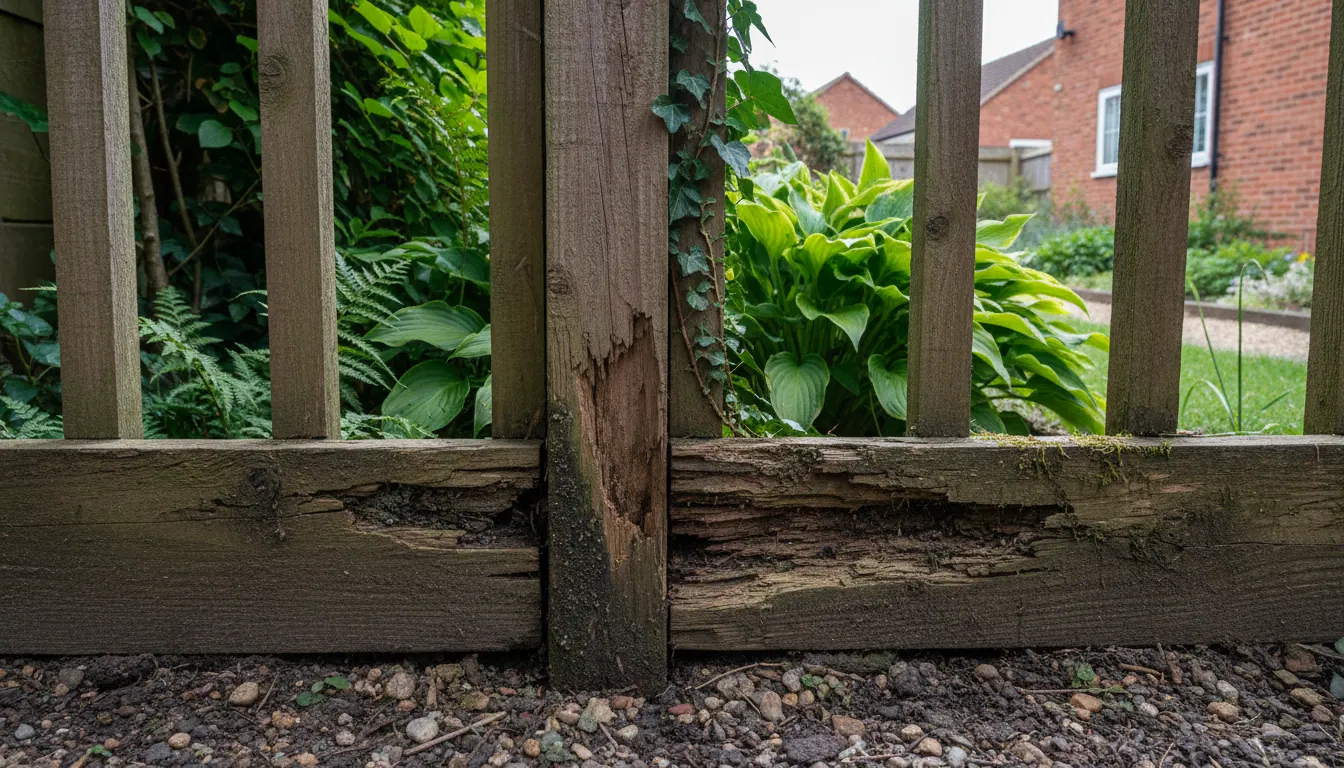
Rotten or loose posts are the single most common cause of repeat fence failures. A post that has been in the ground for ten or more years, especially in the wet Trent valley clay that covers much of Nottinghamshire, will often have rotted at or just below ground level. Replace the panel without addressing the post and the new panel will lean or collapse within a season.
Gravel boards sit at the base of the fence and are designed to take the worst of the ground moisture so the panels above them do not have to. When a gravel board rots through, the bottom of the panel sits directly on damp soil, and rot climbs fast. Fitting new panels over a missing or failed gravel board is a false economy.
Wind loading across open ground is a particular issue in the flatter parts of our patch. Properties on the edges of Grantham, Sleaford or the open farmland south of Newark can see sustained wind pressure that panels simply were not designed for, especially if the fence run is long and exposed with no shelter belt to break the gusts.
Age and UV degradation take their toll on timber over time. Panels that were perfectly serviceable five years ago can become brittle and prone to splitting once the preservative treatment has broken down.
Repair or full replacement: how to decide
Not every damaged panel means a full fence overhaul. Here is how we tend to think about it:
- One or two panels damaged, posts solid, gravel boards intact: a straightforward panel swap is usually fine and cost-effective.
- Posts showing movement or rot at ground level: the posts need to come out and be replaced. Doing that properly means removing the panels anyway, so it makes sense to assess every panel at the same time.
- Gravel boards missing or soft to the touch: replace them as part of the same job.
- Fence over 10-15 years old and showing widespread weathering: a full replacement is often cheaper in the long run than patching section by section over several years.
We have written a more detailed guide on exactly this question if you want to think it through before calling: Repair or replace? What to do with a damaged garden fence in Newark and Nottinghamshire.
What a professional fence panel replacement actually involves
Here is what the job looks like when we carry it out across Nottinghamshire and into Lincolnshire.
1. Assessment first. We look at the whole fence run, not just the panels that have obviously failed. We check post movement at ground level, probe gravel boards, and look at fixings and arris rails.
2. Like-for-like or upgrade? Standard overlap panels are the most common choice for back-garden boundaries. Featherboard (close-board) fencing is stronger, lasts longer, and suits exposed plots better. Decorative options like trellis toppers or hit-and-miss panels suit more sheltered, garden-facing runs. We will talk through the options and give you an honest view of what suits the site.
3. Post replacement where needed. Timber posts go in with a concrete spur or are set in post mix, depending on ground conditions. In heavy Nottinghamshire clay, getting the drainage right around a post base makes a real difference to how long it lasts.
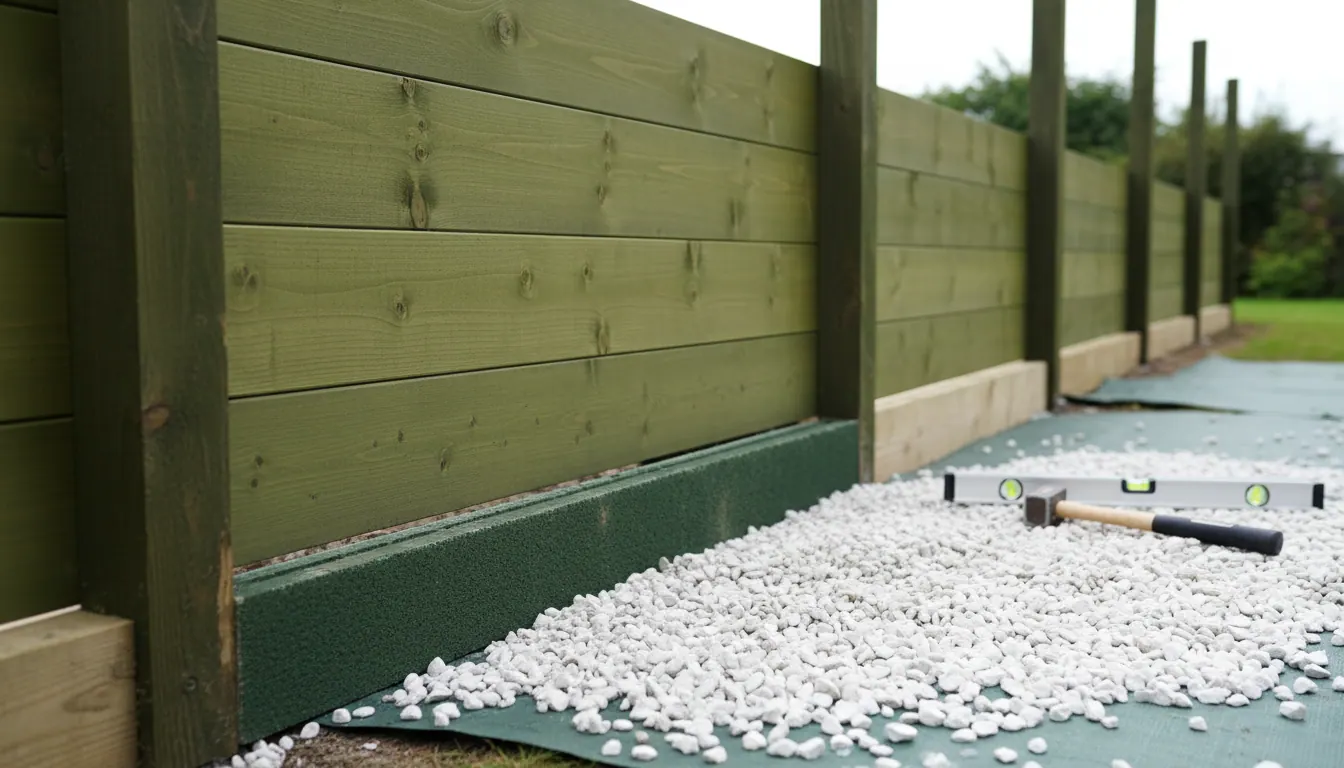
4. Gravel boards fitted as standard. We fit gravel boards on every new fence run we build. On replacements, we always check existing boards and replace any that have softened.
5. Panels fitted, treated, and checked. New panels get a coat of preservative treatment if they have not already been factory-treated. We check alignment along the full run before finishing.
6. Clearance. All old timber, fixings and waste come away with us.
Timing matters: the best and worst times to book fence work
Autumn and early winter are when most fence damage happens, and also when every fencing contractor in Nottinghamshire gets busy. If your fence is damaged but still standing, booking in early rather than waiting for it to fully collapse gives you more flexibility on timing and usually a faster turnaround.
Spring and early summer are often the best time for planned fence replacement. Ground conditions are better, the days are longer, and any new planting or turfing you want to do around the fence can follow on naturally once the work is done.
One thing worth knowing: if there are established trees or shrubs close to the fence line, their roots can complicate post setting. We often work alongside our tree surgery side on these jobs, clearing root pressure or removing a stump that is sitting right where a new post needs to go. If that is relevant to your site, our piece on stump grinding after tree removal explains why dealing with stumps properly matters for any hard landscaping that follows.
Boundary questions: whose fence is it?
This comes up on almost every job. The short answer is: check your title deeds or Land Registry documents. The "T" mark on a boundary plan shows which side owns and is responsible for each fence. If you are not sure, your solicitor's paperwork from when you bought the property is the place to start.
A few practical points:
- You are generally entitled to replace a fence on your own land without needing your neighbour's permission, provided you stay within the boundary.
- Planning permission is not usually needed for a fence under two metres high. Above two metres, or if your property fronts a highway, different rules apply. Check with Newark and Sherwood District Council, Rushcliffe Borough Council, or whichever local authority covers your plot.
- It is always worth having a conversation with your neighbour before work starts, especially if access to their side is needed during the job.
Areas we cover for fence panel replacement
We travel across the full service area from our base, covering Newark-on-Trent, Southwell, Collingham, Bingham and the wider Nottinghamshire area, as well as Grantham, Sleaford, Lincoln and surrounding Lincolnshire villages. If you are not sure whether we cover your postcode, just give us a call and we will confirm quickly.
Rural properties, smallholdings and farms are very much part of what we do. Post-and-rail fencing, stock fencing and longer boundary runs on agricultural land are all jobs we take on, not just domestic panel fencing.
Frequently asked questions
How long does fence panel replacement take in Nottinghamshire?
A straightforward panel swap on a domestic garden fence, where the posts are sound, usually takes half a day to a full day depending on the number of panels. If posts need replacing as well, allow a full day or potentially two for a longer run. We will give you a realistic timeframe when we assess the job.
Do I need planning permission for a new fence in Nottinghamshire?
In most cases, no. A fence up to two metres high on a boundary that does not front a public highway does not need planning permission. If your property is in a conservation area, or if the fence would be over two metres, you should check with your local council before starting work. Newark and Sherwood District Council, Rushcliffe Borough Council and North Kesteven District Council all have planning enquiry lines for exactly this kind of question.
What type of fence panel lasts longest?
Close-board (featherboard) fencing generally outlasts standard overlap panels because it is more rigid and handles wind loading better. Treated softwood posts with concrete spurs, combined with concrete or composite gravel boards, will significantly extend the life of any timber fence. We can talk through the options for your specific site.
Can you replace just one or two fence panels without redoing the whole fence?
Yes, absolutely. If the posts and gravel boards are in good condition, a single panel or a short run of panels can be replaced on its own. We will always tell you honestly if we find post or gravel board issues that make it worth doing more at the same time, but we will never push you into a bigger job than you actually need.
Ready to get your fence sorted?
If you have damaged panels, a leaning fence, or you are just not sure where to start, get in touch and we will come out, take a look, and give you a straight answer on what needs doing. We cover Newark-on-Trent, Southwell, Bingham, Collingham, Grantham, Sleaford, Lincoln and everywhere in between.
Call us on 07572 397309 and we will arrange a convenient time to visit.