Fruit tree pruning in autumn: avoiding silver leaf disease on cherry and plum trees in Nottinghamshire
Pruning fruit trees at the wrong time risks silver leaf disease. We explain the safest window for Newark, Lincoln and Grantham gardens and when to call us.

Why timing your fruit tree pruning matters so much
Grab your pruning saw at the wrong moment and you could do lasting damage without realising it. Silver leaf disease is the main reason fruit tree owners across Nottinghamshire and Lincolnshire need to think carefully before they cut. It is a fungal infection caused by Chondrostereum purpureum, and it enters through fresh pruning wounds on susceptible trees. Cherry, plum, damson, Victoria plum, peach and apricot are all vulnerable. So are some ornamental cherries and almonds. Once it takes hold, it is difficult to manage and can kill branches or the whole tree.
The good news is that timing your cuts correctly reduces the risk significantly.
What is silver leaf disease and why does autumn matter?
Silver leaf gets its name from the distinctive silvery sheen that affected leaves develop. It looks almost metallic. Beneath the surface, the wood often shows a brown stain when you cut into an infected branch.
The fungal spores that cause silver leaf are most active and most abundant in autumn and winter. They are released from bracket-like fruiting bodies that appear on dead wood, and they travel on the wind. If you prune a cherry or plum tree between October and March, the open wound is exposed at exactly the time when spore counts in the air are at their highest. That is the combination you want to avoid.
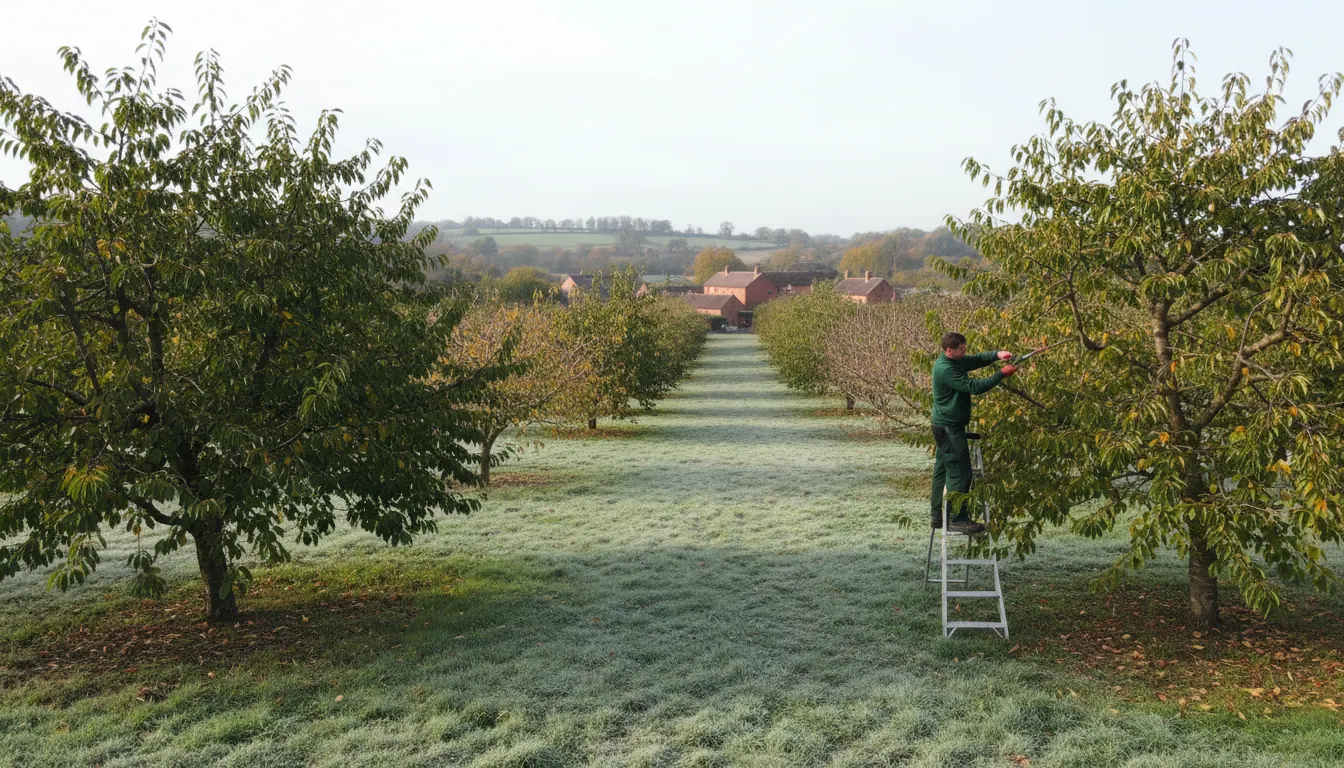
The Royal Horticultural Society and most arboricultural guidance consistently points to the same safe window: prune Prunus species (cherries, plums, damsons and related trees) during dry weather in late spring or early summer, typically May to July. At that point, spore levels are lower and the tree is actively growing, which means it heals wounds quickly and can resist infection more effectively.
The safe pruning window for fruit trees in our area
For most of the gardens and smallholdings we visit around Newark, Southwell, Lincoln, Grantham and Sleaford, the practical advice is this:
- Cherries, plums, damsons and gages: prune from late May through to the end of July, in dry conditions if possible
- Apples and pears: these are not susceptible to silver leaf in the same way, so they can be pruned in late winter (February or early March) when they are fully dormant, or lightly in summer
- Peaches and nectarines: treat like plums, keep to the spring and early summer window
Autumn is genuinely not the right time to carry out formative or heavy pruning on Prunus species. If you have a plum or cherry that needs significant work, the sensible approach is to plan it for next spring and book the job in advance.
That said, there are situations where waiting is not an option.
When you cannot wait: dead, diseased or dangerous branches
If a branch on your cherry or plum tree is already dead, structurally unsafe or showing signs of disease, leaving it until May is not the right call. Dead wood is a source of infection in its own right, and a heavy or poorly attached branch can fail in autumn gales. Lincolnshire's exposed villages and the open ground around the Wolds and Trent valley mean that wind-damaged trees are a real and regular concern once October arrives.
In those cases, we remove the affected material as carefully as possible, cutting back to clean healthy wood and making the cut at the correct angle to encourage drainage. We also check whether the tree has any existing silver leaf infection before we start, because that affects how we approach the work.
If you are worried about a fruit tree that looks unwell, has dead patches, or has branches you are not sure about, it is worth getting a professional eye on it before the worst of the winter weather arrives. You can read more about spotting problems early in our article on when to call a tree surgeon: spotting dangerous branches before winter storms in Lincolnshire.
Apples, pears and other fruit trees: different rules
Not every fruit tree carries the same silver leaf risk. Apple and pear trees are not Prunus species, and they can be pruned in winter without the same level of concern. For most apple trees in Nottinghamshire and Lincolnshire gardens, late winter pruning (February into early March) is perfectly sensible. The tree is dormant, you can see the structure clearly without leaves in the way, and wounds heal reasonably well once growth resumes in spring.
Rowan and ornamental crab apple are also worth mentioning. Rowan is not a Prunus, so winter pruning is generally fine. Ornamental crabs can be lightly pruned in winter or early spring. Neither carries the silver leaf risk that plums and cherries do.
Walnut is a different case again. Walnuts should be pruned in summer (June or July) to avoid excessive bleeding from cut wounds. If you have a mature walnut in your garden near Collingham or Bingham and it needs work, summer is the window to aim for.
TPOs, conservation areas and fruit trees
Before we prune or remove any tree, it is worth checking whether it is protected. Tree Preservation Orders can apply to fruit trees just as they can to ornamental or native species. If you live in a conservation area, you are required to give six weeks' notice to the local planning authority before carrying out significant work on any tree with a trunk diameter above a certain size, even if there is no specific TPO on it.
Newark and Sherwood District Council, Lincolnshire County Council and the relevant district councils all have online TPO maps and conservation area boundaries. It takes ten minutes to check and can save you a significant amount of trouble. We always advise customers to do this before booking any tree work, and we are happy to help you understand what applies to your situation.
For a fuller explanation of how permissions work in this area, our article on whether you need permission to fell or prune a tree in Newark-on-Trent and Nottinghamshire covers the key rules clearly.
What about bird nesting season?
Nesting season runs broadly from March to August, though birds can nest outside those months. The main implication for fruit tree pruning is that if you are planning to cut back a mature fruit tree with dense growth in spring or early summer, it is worth checking for active nests before you start. Disturbing an active nest is an offence under the Wildlife and Countryside Act 1981.
This does not mean you cannot prune fruit trees in May or June. It means you check carefully first. We always do this as a matter of course before starting any hedge or tree work during that period.
Frequently asked questions
When is the best time to prune cherry and plum trees to avoid silver leaf disease? The safest window is late May through to the end of July, in dry conditions. This is when spore levels are lowest and the tree heals most effectively. Autumn and winter pruning on Prunus species significantly increases the risk of silver leaf entering through cut wounds, so we avoid it unless there is a safety reason that cannot wait.
What does silver leaf disease look like on a fruit tree? The most visible sign is a silvery or metallic sheen on the leaves of affected branches. If you cut into an infected branch, you will often see a brown or purple stain in the wood beneath the bark. Advanced infections can cause branch dieback and eventually kill the tree. If you suspect silver leaf, get professional advice rather than pruning heavily yourself, as poor pruning at the wrong time can spread the problem.
Can I prune apple trees in autumn? Apple trees are not susceptible to silver leaf in the way that cherries and plums are, so autumn pruning is not the same risk. Most arboricultural guidance suggests late winter (February into early March) as the ideal time for apples, when the tree is fully dormant. Light summer pruning of apple trees is also common, particularly for trained forms. If you are unsure about what your tree needs, we are happy to take a look and advise.
Do I need a tree surgeon to prune a fruit tree, or can I do it myself? For small, young fruit trees with straightforward structure, careful DIY pruning in the right season is perfectly reasonable. Where we would always recommend calling a professional is when the tree is large, when there are branches over a building, fence or power line, when the tree shows signs of disease or structural weakness, or when you are not sure of the correct cuts to make. Getting it wrong on a mature plum or cherry can shorten the tree's life considerably.
If you have fruit trees in your garden around Newark, Lincoln, Grantham, Sleaford or anywhere across Nottinghamshire and Lincolnshire and you want an honest assessment of what they need, we are always glad to help. Call us on 07572 397309 to arrange a visit or to talk through what work might be needed and when.